

Current Issue
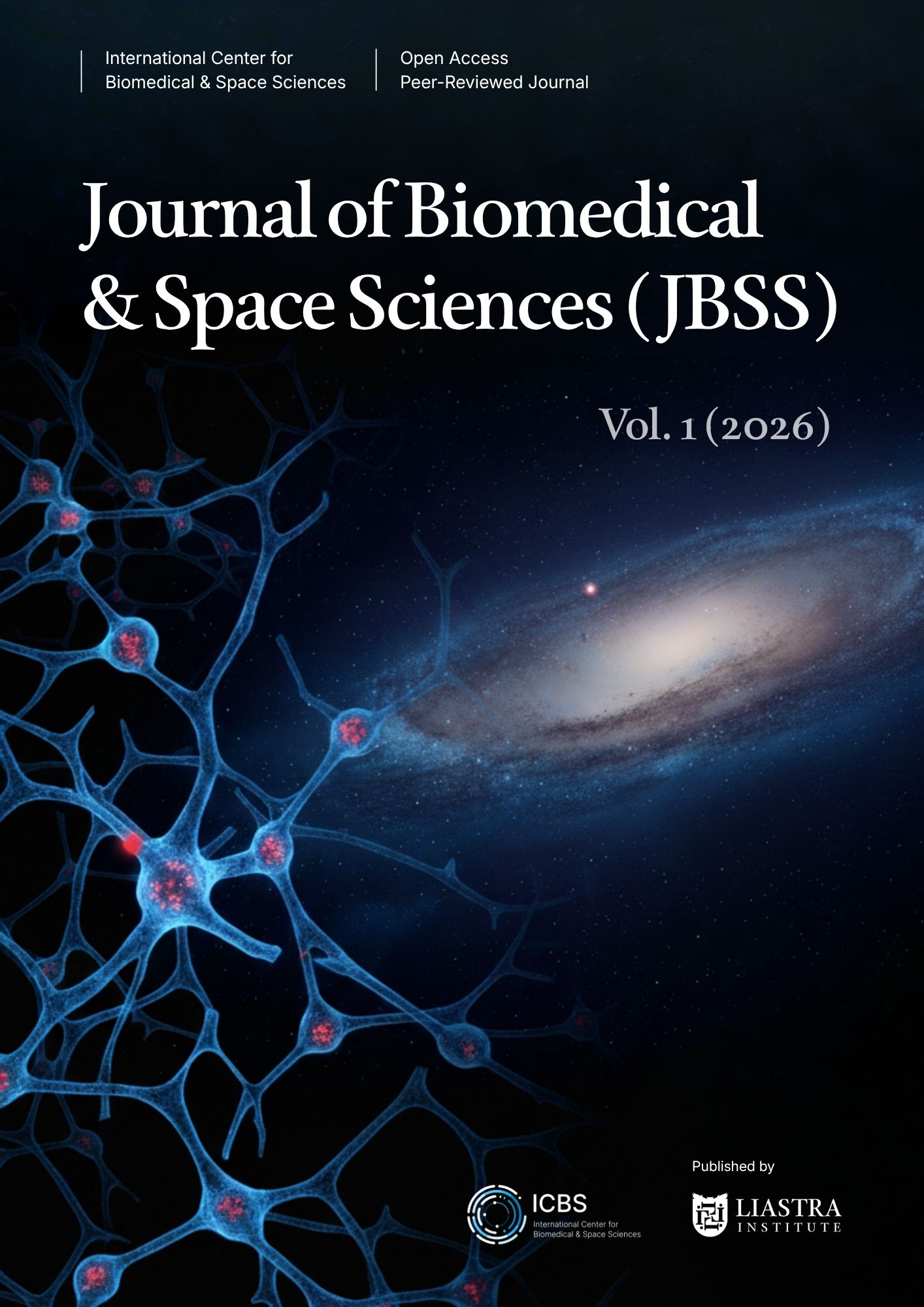
Volume 1 (2026) inaugurates the Journal of Biomedical & Space Sciences (JBSS), an international scientific journal dedicated to the integration of Biomedical Sciences, Space Sciences, Engineering, and Technologies applied to health and space environments.
Published under a continuous publication model, this volume brings together original research, systematic reviews, experimental studies, and interdisciplinary contributions addressing biomedical, technological, and scientific challenges related to space exploration and their applications on Earth.
the Journal of Biomedical & Space Sciences (JBSS) aims to promote scientific innovation, academic excellence, and global collaboration in the fields of biomedicine, aerospace engineering, space medicine, biotechnology, and advanced systems for extreme environments.
Announcements
Call for Papers – Volume 1 (2026)
JBSS invites researchers to submit manuscripts for the first volume of the journal.
More…
Launch of the Journal of Biomedical & Space Sciences (JBSS)
The Journal of Biomedical & Space Sciences (JBSS) is officially launched as a new international open-access journal dedicated to biomedical and space sciences.
More…
Articles
Research scope
Interdisciplinary fields covered by JBSS
Biomedical Sciences
Research involving human health, physiology, disease, and translational biomedical science.
Aerospace Medicine
Human performance, health protection, and medical challenges in aviation and spaceflight.
Space Systems Engineering
Systems, technologies, operations, and engineering solutions for space missions.
Microgravity Research
Biological, physiological, physical, and technological effects of reduced-gravity environments.
Interdisciplinary Space Technologies
Cross-disciplinary innovations connecting medicine, engineering, biology, data, and space exploration.
Publish with JBSS
We welcome contributions from researchers worldwide
JBSS accepts high-quality original research articles, review articles, technical reports, and interdisciplinary contributions relevant to its scientific scope.